Advancing Colorectal Cancer Research with Biomarker-Driven Tools
As colorectal cancer research continues to shift toward precision approaches, the ability to accurately detect and characterize key biomarkers is more important than ever.
Vector Laboratories' blog provides a wealth of information on immunohistochemistry (IHC), immunofluorescence (IF), and related life science research topics.
As colorectal cancer research continues to shift toward precision approaches, the ability to accurately detect and characterize key biomarkers is more important than ever.

Alzheimer’s Disease is complex disease on the rise worldwide. Glycosylation is critical to every facet of disease mechanisms and treatments.
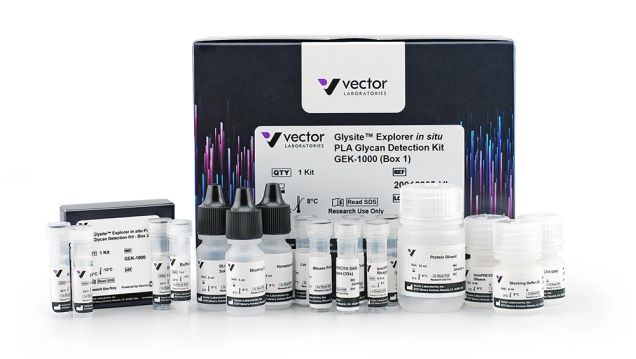
Join us at booth #21 to explore solutions across spatial analysis, single cell proteomics, and biomarker discovery. This year, Vector Labs is highlighting new approaches to protein glycosylation and spatial biology, alongside our broader portfolio... Read more

Glycosylation is an understudied but critical component of colon carcinoma. The right tools aid in cancer research, diagnosis, and treatment.

Protein glycosylation is ubiquitous yet overlooked. Learn how Vector’s suite of tools bring protein glycosylation insights to researchers across fields.

The body’s autoimmune response has been leveraged by cancer researchers to propel immunotherapy tools into clinical use. Although the main focus has been on the ability of T-cells to fight cancer cells, the involvement of... Read more

The body’s autoimmune response has been leveraged by cancer researchers to propel immunotherapy tools into clinical use. Although the main focus has been on the ability of T-cells to fight cancer cells, the involvement of... Read more

This blog post covers how glycans and t-cells are connected and their importance in the immune system response.

This blog post covers how glycans contribute to cellular mechanisms of health and disease.

As a part of Alzheimer’s Disease Month, we will be highlighting research being done to look for a new therapeutic target.